Novalock Ransomware: A Threat Targeting Corporate Data Integrity
Table of Contents
What is Novalock Ransomware?
Novalock Ransomware is a file-encrypting threat belonging to the notorious GlobeImposter ransomware family. This ransomware stands out due to its specific targeting of corporate environments rather than individual users. The hallmark of Novalock is its ability to encrypt files on an infected system, appending the ".novalock" extension to each compromised file. For instance, a file named "document.pdf" would be renamed "document.pdf.novalock," rendering it inaccessible without the decryption key.
After completing the encryption process, Novalock leaves behind a ransom note titled "how_to_back_files.html." This message informs the victim that their company's network has been breached, sensitive data has been stolen, and files have been encrypted. The attackers demand a ransom in exchange for the decryption key, threatening to leak stolen data if the ransom is not paid. The note also warns against using third-party decryption tools, claiming such attempts would make the data irrecoverable.
Here's what the ransom note says:
YOUR PERSONAL ID:
-
/!\ YOUR COMPANY NETWORK HAS BEEN PENETRATED /!\
All your important files have been encrypted!
Your files are safe! Only modified. (RSA+AES)
ANY ATTEMPT TO RESTORE YOUR FILES WITH THIRD-PARTY SOFTWARE
WILL PERMANENTLY CORRUPT IT.
DO NOT MODIFY ENCRYPTED FILES.
DO NOT RENAME ENCRYPTED FILES.
No software available on internet can help you. We are the only ones able to
solve your problem.We gathered highly confidential/personal data. These data are currently stored on
a private server. This server will be immediately destroyed after your payment.
If you decide to not pay, we will release your data to public or re-seller.
So you can expect your data to be publicly available in the near future..
We only seek money and our goal is not to damage your reputation or prevent
your business from running.
You will can send us 2-3 non-important files and we will decrypt it for free
to prove we are able to give your files back.
Contact us for price and get decryption software.
email:
pomocit02@kanzensei.top
pomocit02@surakshaguardian.com
* To contact us, create a new free email account on the site: protonmail.com
IF YOU DON'T CONTACT US WITHIN 72 HOURS, PRICE WILL BE HIGHER.
* Tor-chat to always be in touch:-
The Goals of Ransomware: Data Encryption and Financial Extortion
Ransomware programs like Novalock are designed to hold critical data hostage until the victim complies with financial demands. Novalock's operation reflects the broader strategies employed by such threats, leveraging encryption to deny victims access to their own data while creating a sense of urgency. In Novalock's case, victims are given 72 hours to contact the attackers before the ransom amount increases.
To further persuade victims, the attackers offer to decrypt three files for free as a proof that they can restore the data. However, paying the ransom is a gamble. Cybercriminals often fail to deliver decryption tools even after receiving payment, leaving victims with compromised files and financial losses. As such, cybersecurity experts strongly advise against paying ransoms.
Removal and Recovery Challenges
While removing Novalock from a system can prevent further file encryption, it does not restore the already affected data. The only reliable way to recover such files is through backups created prior to the attack and stored in secure locations. This underscores the importance of maintaining multiple backups across different storage solutions, such as offline devices and remote servers.
Novalock's ransom note highlights the danger posed by these types of threats to organizations. Beyond file encryption, the exfiltration of sensitive data compounds the risk, potentially leading to reputational damage and regulatory penalties if stolen data is leaked.
How Ransomware Programs Operate
Ransomware programs like Novalock typically use advanced cryptographic algorithms to ensure their encryption is nearly impossible to bypass without the decryption key. Depending on the ransomware, these algorithms can be symmetric or asymmetric, impacting how the data is locked and unlocked. Additionally, ransom amounts can vary significantly, often tailored to the financial capacity of the victim. Individual users may face demands in the hundreds of dollars, while larger organizations could be targeted with six- or seven-figure ransoms.
Ransomware's distribution methods are equally sophisticated. They often leverage phishing attacks and social engineering techniques. These methods trick users into downloading and executing malicious files disguised as legitimate documents, software updates, or links. Once executed, the ransomware infiltrates the system and begins its encryption process.
Staying Protected Against Ransomware
Preventing ransomware infections requires a proactive approach to cybersecurity. First and foremost, users must exercise caution while interacting with online content, especially unsolicited emails or messages containing attachments or links. Files from untrusted sources, such as unofficial software repositories or peer-to-peer networks, should be avoided.
Additionally, using robust security solutions, keeping software updated, and maintaining regular backups in multiple secure locations can significantly reduce the risk of ransomware attack. Backups should be stored offline or in remote servers to ensure they remain inaccessible to threats like Novalock.
Final Thoughts
Novalock Ransomware exemplifies the growing sophistication of file-encrypting threats targeting businesses. By encrypting critical data and threatening to leak stolen information, attackers aim to pressure organizations into paying a hefty ransom. However, compliance offers no guarantees of data recovery and often emboldens cybercriminals to continue their activities.
Vigilance, preparation, and proactive cybersecurity measures are the best defense against ransomware. By fostering a culture of caution and implementing strong data protection practices, businesses and individuals alike can minimize the risk of ransomware attacks and their devastating consequences.
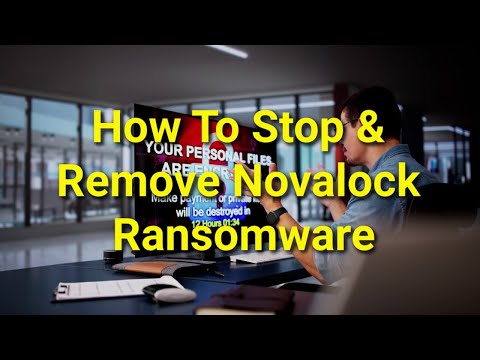
How To Safely Detect, Stop, & Remove Novalock Ransomware To Prevent File Encryption