BlackHeart (MedusaLocker) Ransomware Is a Data Trap
Table of Contents
Understanding BlackHeart Ransomware
BlackHeart is a ransomware strain belonging to the MedusaLocker family, designed to encrypt data and demand payment for file recovery. Once executed on a compromised system, BlackHeart encrypts files and appends the ".blackheart138" extension, making them inaccessible. For instance, a file named "document.jpg" would appear as "document.jpg.blackheart138" after encryption. The ransomware also generates a ransom note, typically titled "read_this_to_decrypt_files.html."
The ransom note delivers a distressing message, informing the victim that their company network has been infiltrated and all critical files have been encrypted. The attackers claim to have exclusive access to decryption tools and warn against any independent file restoration attempts. Victims are also threatened with data leaks or sales if they fail to comply with the ransom demands.
Here's what the ransom note says:
Your personal ID:
-
/!\ YOUR COMPANY NETWORK HAS BEEN PENETRATED /!\
All your important files have been encrypted!Your files are safe! Only modified. (RSA+AES)
ANY ATTEMPT TO RESTORE YOUR FILES WITH THIRD-PARTY SOFTWARE
WILL PERMANENTLY CORRUPT IT.
DO NOT MODIFY ENCRYPTED FILES.
DO NOT RENAME ENCRYPTED FILES.No software available on internet can help you. We are the only ones able to
solve your problem.We gathered highly confidential/personal data. These data are currently stored on
a private server. This server will be immediately destroyed after your payment.
If you decide to not pay, we will release your data to public or re-seller.
So you can expect your data to be publicly available in the near future..We only seek money and our goal is not to damage your reputation or prevent
your business from running.You will can send us 2-3 non-important files and we will decrypt it for free
to prove we are able to give your files back.Contact us for price and get decryption software.
email:
support1@contonta.com
support2@cavopo.com
* To contact us, create a new free email account on the site: protonmail.com
IF YOU DON'T CONTACT US WITHIN 72 HOURS, PRICE WILL BE HIGHER.* Tor-chat to always be in touch:
What BlackHeart Ransomware Wants
Like other ransomware strains, BlackHeart is designed to extort money from its victims. The ransom note tells victims to contact the attackers via provided email addresses (such as support1@contonta.com or support2@cavopo.com) or through a Tor-based chat service. The attackers impose urgency by warning that if the victim does not establish communication within 72 hours, the ransom amount will increase.
Another pressing concern is the threat of data exposure. The ransom note states that personal and sensitive data have been collected, and if payment is not made, the stolen information may be sold or publicly leaked. This tactic pressures victims into compliance, fearing reputational damage or legal consequences.
The Reality of Ransomware Infections
Once ransomware like BlackHeart has encrypted files, decryption without the attackers' assistance is highly unlikely. This is because cybercriminals often use robust cryptographic algorithms such as RSA and AES to lock files securely. Without access to the decryption key, restoring data is almost impossible unless third-party decryption tools are available—which is rare.
Despite this, paying the ransom is strongly discouraged. There is no guarantee that the attackers will provide the decryption key after payment, and funding ransomware operators only encourages further criminal activity. The best safeguard against such attacks remains regular and secure data backups.
Preventing Further Damage
Removing BlackHeart ransomware from an infected system is critical to preventing further encryption and limiting its spread across connected networks. However, removing the ransomware itself does not restore encrypted files. The only viable recovery method is to restore data from a backup stored separately from the compromised system.
Organizations and individual users should adopt cybersecurity best practices to mitigate future risks. Regularly backing up data offline or in cloud-based storage can prevent permanent data loss. Security-conscious behavior, such as avoiding suspicious downloads and phishing emails, also reduces the likelihood of ransomware infections.
How Ransomware Spreads
Ransomware like BlackHeart is distributed through various deceptive means. Attackers frequently exploit system vulnerabilities, outdated software, or misconfigured security settings to infiltrate networks. They also deploy social engineering techniques, such as phishing emails, to trick users into opening malicious attachments or clicking harmful links.
In other cases, ransomware may be disguised as legitimate software, bundled with pirated applications, or spread via drive-by downloads from compromised websites. Cybercriminals also leverage malicious ads, peer-to-peer sharing networks, and infected USB drives to deliver ransomware payloads.
Key Security Takes
To minimize the risk of ransomware infections, users should follow these security guidelines:
- Download software solely from trusted sources such as official websites and reputable app stores.
- Regularly update operating systems and applications to fix security vulnerabilities.
- Be careful when opening email attachments or clicking links, especially if they originate from unknown senders.
- Use strong security solutions to detect and block ransomware threats.
- Avoid interacting with suspicious ads, pop-ups, or untrusted websites.
By adopting these proactive measures, users can greatly reduce their exposure to ransomware threats like BlackHeart. Maintaining data security and exercising caution while browsing the internet are essential steps in defending against evolving cyber threats.
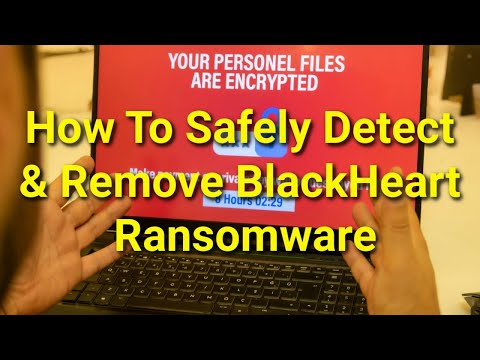
How To Stop & Remove Blackheart Ransomware To Prevent File Encryption